
Services

Dental Implants

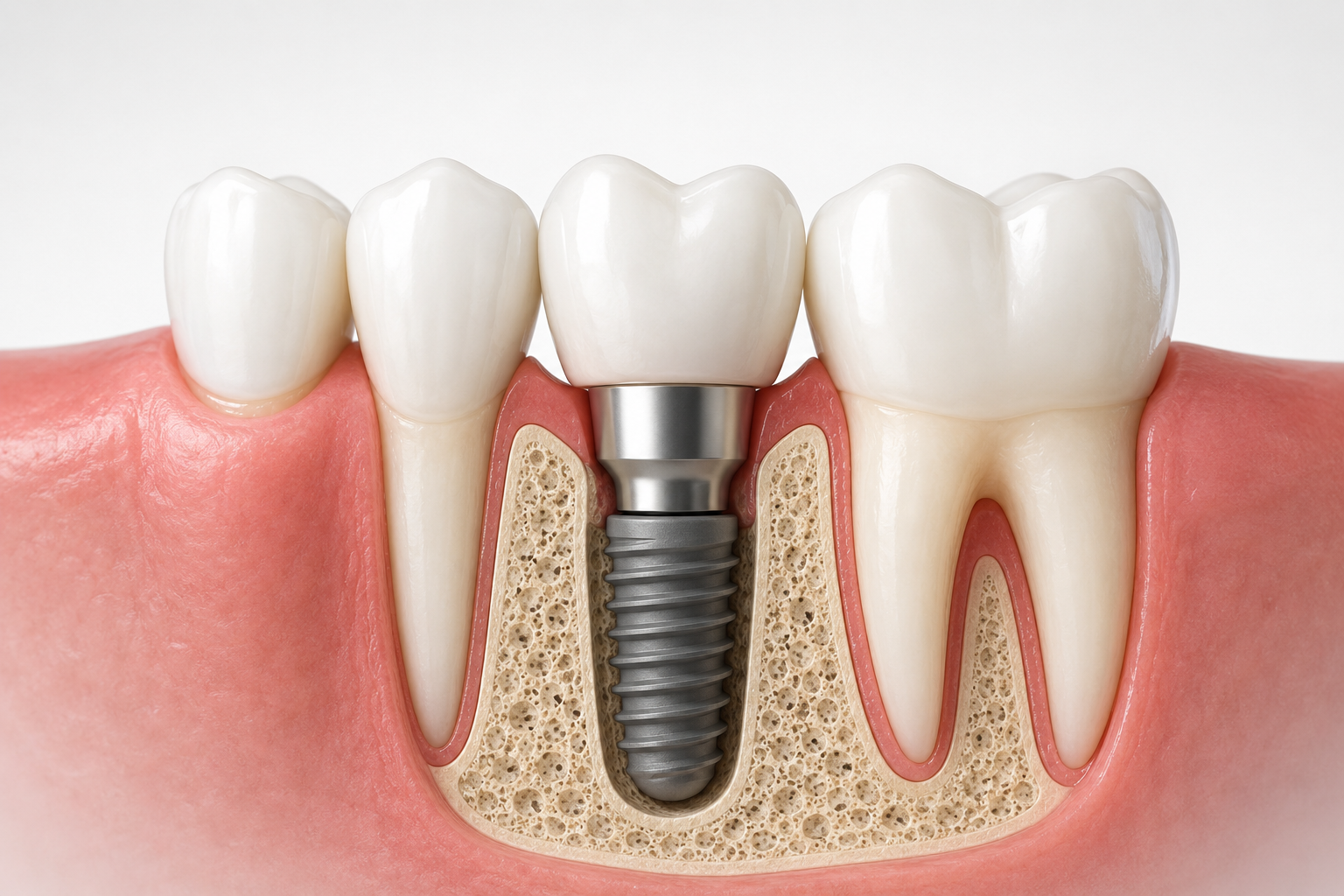
Dental implants replace missing tooth roots with small posts placed in the jawbone. After healing, implants can support a single crown, a bridge, or a denture for a stable, natural-looking tooth-replacement solution.

What are dental implants?

An implant restoration usually has three parts: the implant placed in the jawbone, a connector called an abutment, and the visible crown, bridge, or denture. The implant becomes stable as the surrounding bone heals around it through a process called osseointegration.

Implants can replace one tooth, several teeth, or support a full-arch restoration. They do not require a neighboring tooth to support a single replacement, but they do require adequate bone, healthy tissues, careful planning, and ongoing home and professional care. They are a long-term option, not a maintenance-free or guaranteed one.
Why patients choose implants

Look and feel like natural teeth

Prevent bone loss and preserve facial structure

No slipping, clicking, or adhesive needed

Can last a lifetime with proper care

Restore full chewing and speaking ability

Support single crowns, bridges, or full dentures

FAQs

Candidacy depends on oral health, bone, medical history, medications, smoking, healing, and the proposed restoration. A consultation and imaging are required.

Timelines vary widely. Some steps can occur together, while other cases require extraction healing, bone grafting, or several months of implant healing before the final tooth is attached.

Yes. Implants can add retention and stability to certain removable dentures or support a fixed full-arch restoration. The number and position of implants depend on the plan.

Request an appointment.

Missing teeth or struggling with a loose denture? Request an implant consultation with RSDO.