
What is Composite Bonding?
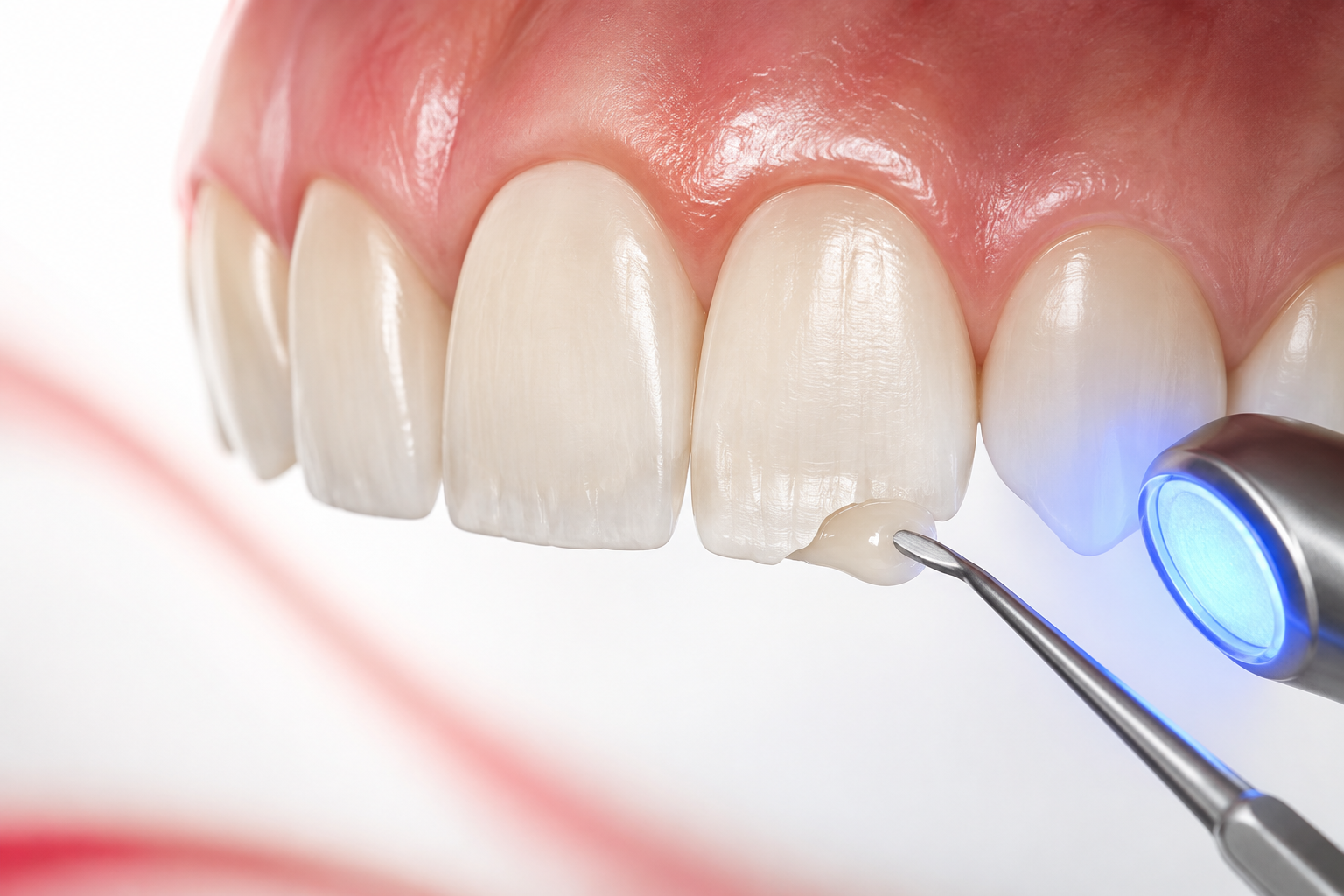
During dental bonding, a tooth-colored composite resin is applied directly to the tooth, sculpted to the desired shape, hardened with a curing light, and polished. The material is similar to that used for tooth-colored fillings, but cosmetic bonding is planned to improve the visible shape, proportion, or color of the smile.
Bonding can provide a noticeable improvement without the laboratory process used for porcelain veneers. However, composite is generally more likely than porcelain to stain, wear, or chip over time. The dentist will also confirm that bonding is suitable for the amount of change needed and that decay, gum disease, bite pressure, or a larger fracture does not call for another treatment.
When might it be recommended
- A front tooth has a small chip, worn edge, or minor shape difference.
- A small space between teeth may be improved without orthodontic movement.
- A localized stain or cosmetic imperfection does not respond to whitening alone.
- You want to compare a conservative, repairable option with veneers or other cosmetic treatment.
What to expect
- Smile and bite evaluation: Your dentist examines the tooth, gums, bite, and cosmetic goals and determines whether bonding can provide a predictable result.
- Shade selection and preparation: A composite shade is selected to blend with the surrounding enamel. The tooth surface is cleaned and conditioned so the resin can bond.
- Sculpting and curing: Composite resin is applied in layers, shaped to the planned contour, and hardened with a special light.
- Finishing and polishing: The dentist refines the shape, checks how the teeth meet, smooths the edges, and polishes the material to a natural-looking finish.
