
What are Orthodontic Appliances?
Orthodontic appliances are custom devices used to guide tooth movement, influence jaw development, preserve space, or support braces and aligners. The right appliance is selected for a specific problem and stage of growth.
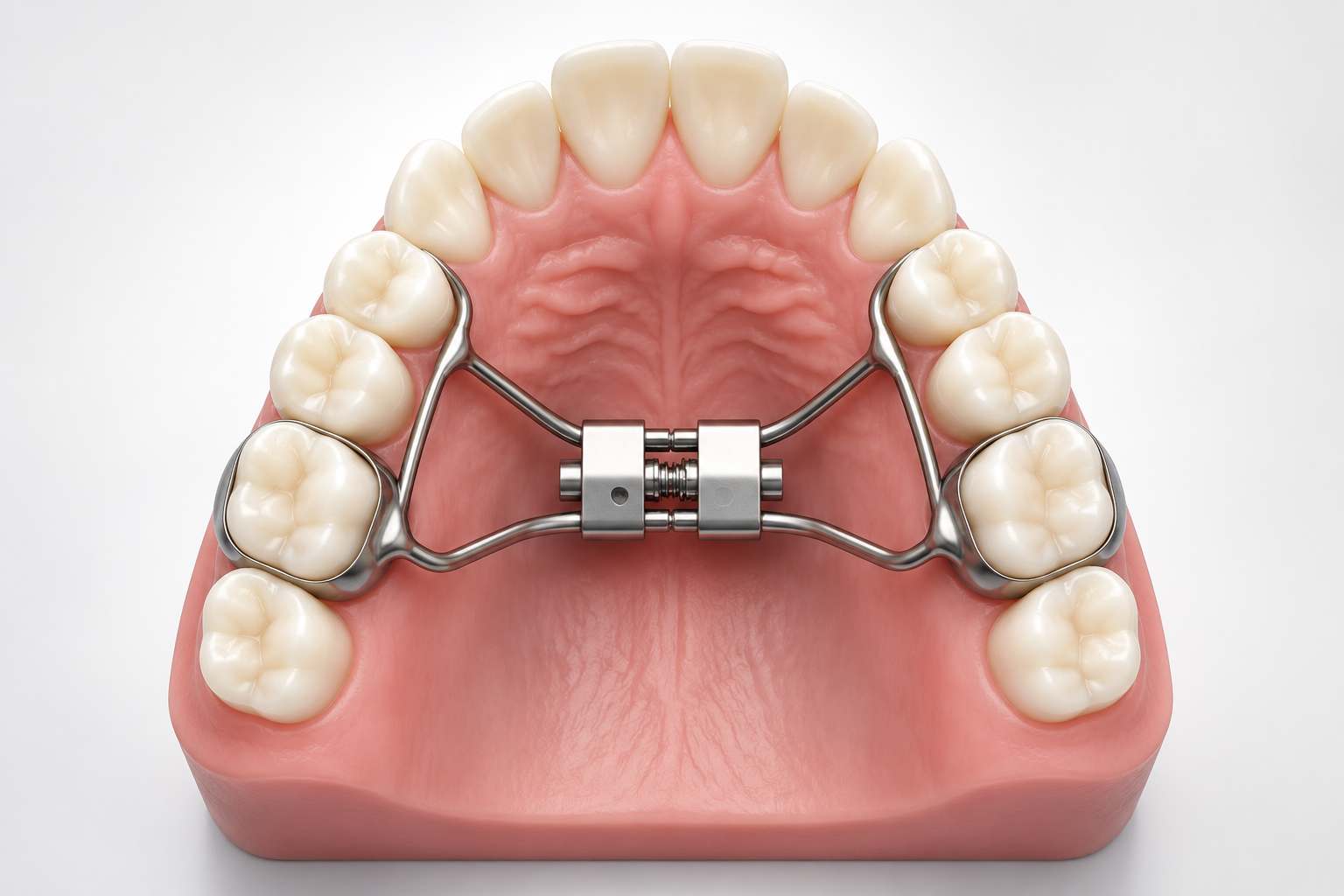
Some appliances are fixed to the teeth, while others can be removed by the patient. Common examples include palatal expanders that widen a narrow upper jaw, space maintainers that hold room for an unerupted permanent tooth, holding arches, functional appliances that help guide jaw relationships, and habit appliances used for persistent tongue or oral habits.
An appliance is not automatically needed for every orthodontic patient. Timing matters, especially when treatment is intended to work with a child’s growth. An orthodontic evaluation identifies whether monitoring, an appliance, braces, aligners, or a combination is appropriate.
When might it be recommended?
- You have crowded, rotated, or widely spaced teeth.
- Your upper and lower teeth do not fit together properly.
- Your case requires movements that may be difficult to achieve with removable aligners.
- You prefer an appliance that stays in place and does not depend on remembering to insert trays.
