
What are Traditional Braces?
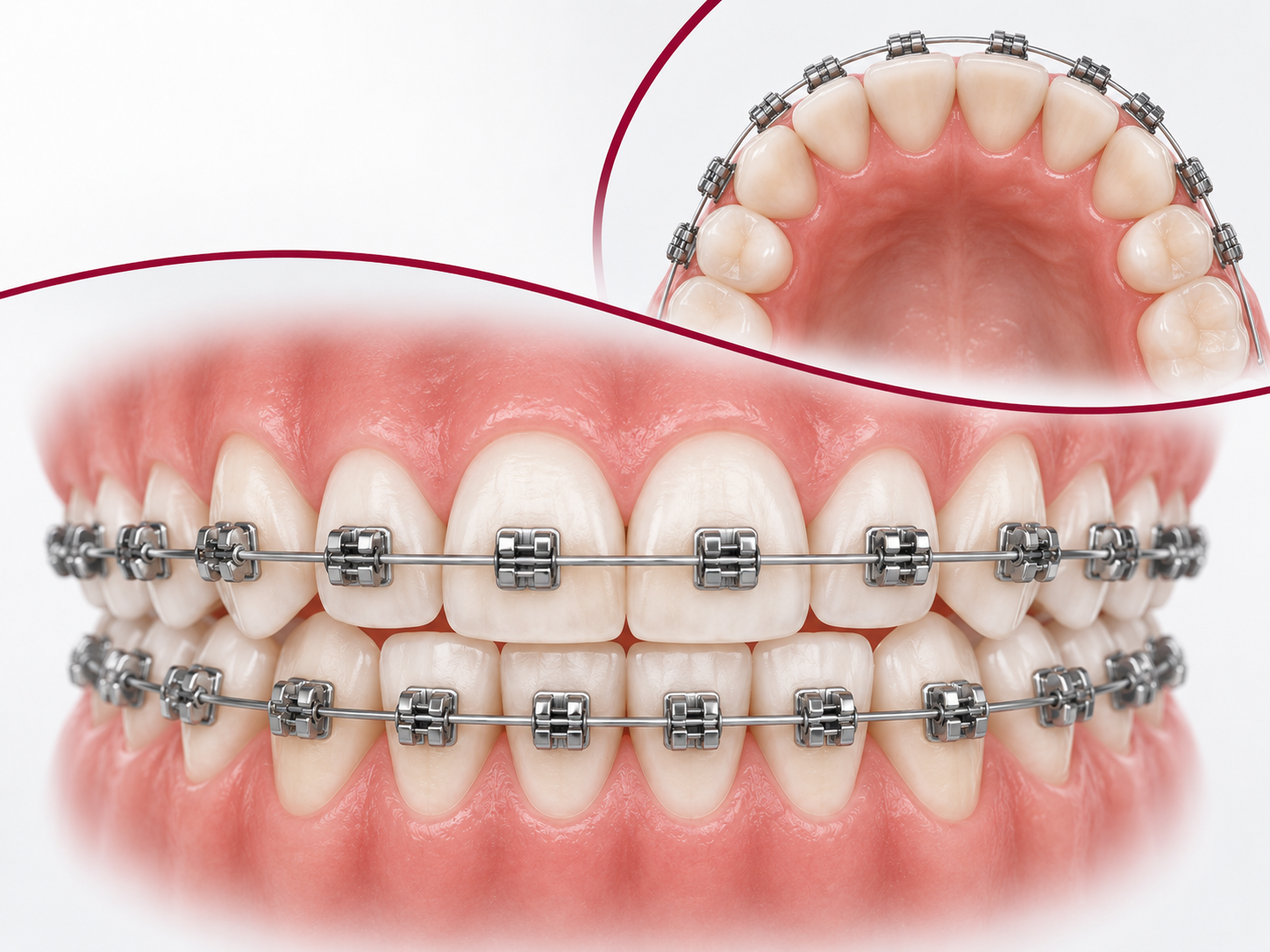
Traditional braces use brackets and wires to guide teeth into healthier positions with precise, continuous control. They remain a dependable choice for a wide range of orthodontic needs in children, teens, and adults.
Brackets are bonded to the teeth and connected by an archwire. The wire provides gentle force, while the brackets act as handles that guide individual tooth movement. Elastics, springs, or other components may be added when the treatment plan requires more specific movement or bite correction.
Metal braces are the most familiar option. Tooth-colored ceramic braces may be available for patients who want a less noticeable appearance. The recommended design depends on the bite, treatment goals, age, habits, and the amount of control needed.
When might it be recommended?
- You have crowded, rotated, or widely spaced teeth.
- Your upper and lower teeth do not fit together properly.
- Your case requires movements that may be difficult to achieve with removable aligners.
- You prefer an appliance that stays in place and does not depend on remembering to insert trays.
